

 By Mr.Sun
A stainless casting can satisfy its specified chemistry and still require a separate microstructure assessment. This is why a purchase order that asks only for a material certificate may not answer a customer’s question about ferrite. Chemical analysis identifies the elements present. A ferrite measurement investigates a different characteristic of the material in its processed condition.
For engineers buying cast stainless components, the useful question is not which test is better. It is which characteristic must be controlled, where it matters, and what evidence will demonstrate conformity. Treating a magnetic reading as a substitute for a complete alloy analysis can create an avoidable acceptance dispute.
Start with the material requirement, not a magnet
A hand magnet is a qualitative observation, not a grade-identification instrument. Austenitic cast stainless steels can contain ferrite, while duplex grades intentionally contain both ferrite and austenite. Attraction alone does not establish an incorrect alloy, a satisfactory phase balance, or compliance with a particular purchase specification.
The buyer should identify the ordered casting grade and heat-treatment condition before discussing a ferrite limit. A requirement borrowed from a wrought product, welding consumable or unrelated application may not be appropriate. If magnetic performance itself matters, such as near a sensitive instrument, the specification should address that performance directly instead of relying on a vague instruction to supply nonmagnetic stainless steel.
Keep composition and structure as separate records
Chemical analysis provides elemental results for the tested material. The report needs a sample identity, analytical method and applicable grade limits. A ferrite instrument uses a different measurement principle and requires suitable calibration, surface access and an agreed reporting convention. Ferrite Number and percentage terminology should not be exchanged casually on an inspection report.
The Nickel Institute’s guide to stainless and nickel-base castings discusses cast grades and ferrite assessment. Its metallurgical background is useful when preparing a requirement, but it does not replace the project specification or establish a universal ferrite acceptance range for every component.
| Question | Chemical analysis | Ferrite assessment |
|---|---|---|
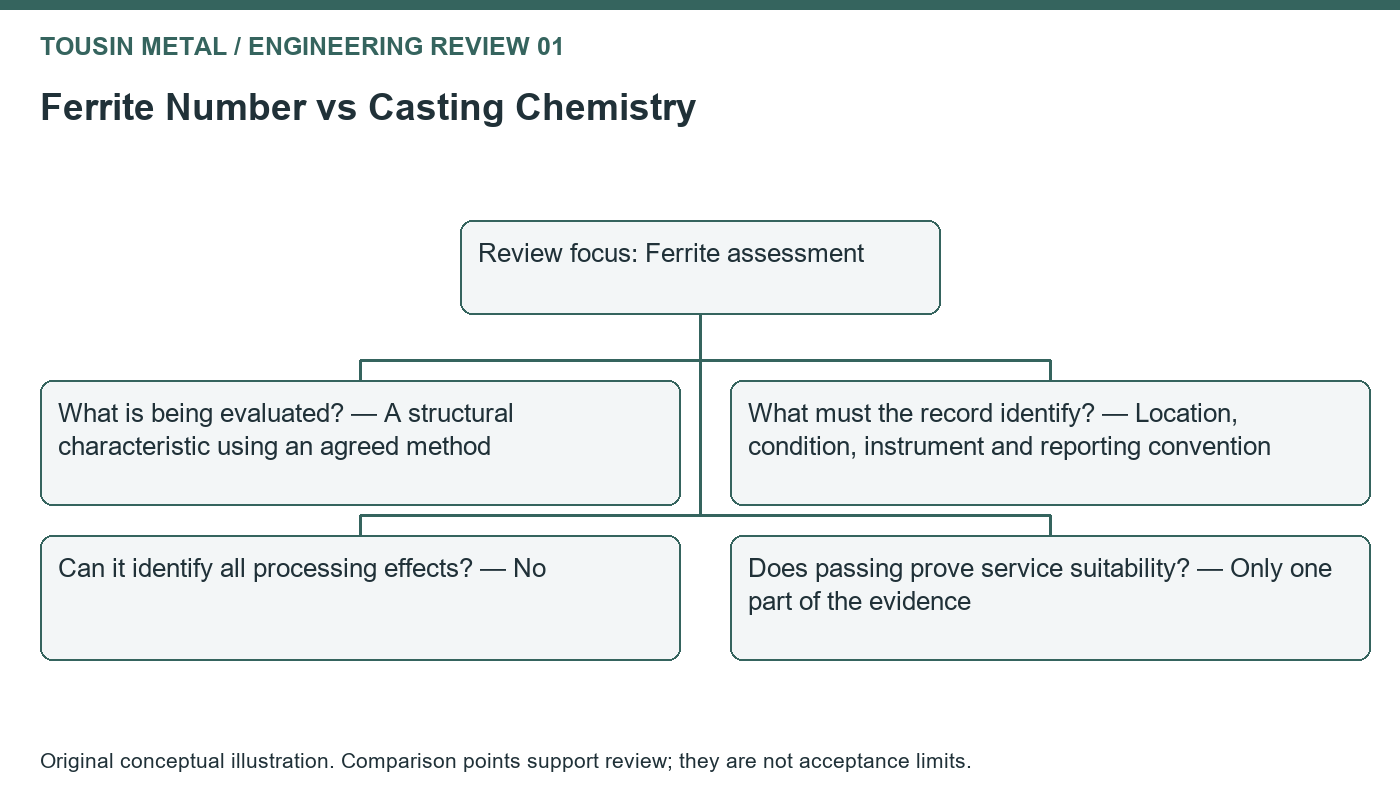
| What is being evaluated? | Elemental composition of the sample | A structural characteristic using an agreed method |
| What must the record identify? | Heat, sample and analytical results | Location, condition, instrument and reporting convention |
| Can it identify all processing effects? | No | No |
| Does passing prove service suitability? | Only one part of the evidence | Only one part of the evidence |
Choose locations that represent the concern
A single accessible flat area is convenient, but convenience should not silently define the inspection plan. A thin rib, a thick boss and a repaired region may present different conditions. If a project requires several locations, show them on a drawing or inspection sketch so repeat orders use the same interpretation.
Surface curvature and limited probe access also deserve attention. Before specifying a value at the bottom of a narrow recess, ask the laboratory whether the chosen instrument can make a valid measurement there. An alternative specimen or method requires agreement; the inspector should not substitute one without recording the change.
Resolve conflicting results before rejecting a heat
Consider a casting with satisfactory chemistry but a ferrite result outside the agreed range. First confirm the part identity, heat-treatment condition, reporting units and calibration. Then repeat the measurement according to the approved procedure. If the discrepancy remains, the disposition should come from the responsible materials authority rather than from averaging incompatible measurements until the number passes.
The reverse situation is equally important. A plausible ferrite result does not excuse missing chemistry or an incorrect elemental limit. Each requirement needs its own conformity decision. Keeping the records separate makes the investigation clearer and avoids treating one attractive number as a substitute for the entire material specification.
Write an inspection note that can be repeated
A useful order note identifies the casting grade, required condition, ferrite method, locations, reporting convention, acceptance limits and document linkage. It also states whether the requirement applies to every part, a sampling plan, or specified qualification specimens. The scope must be agreed before production because inspection access can influence the route.
When discussing a stainless component with Tousin Metal, send the material requirement alongside the drawing rather than adding a ferrite request after the shipment is ready. The aim is a repeatable verification plan, not an unsupported promise that every stainless casting should give the same magnetic response.
Technical reference
Nickel Institute: Stainless Steel and Nickel-Base Castings provides background on cast alloys and ferrite. The purchasing and inspection examples above are illustrative engineering scenarios; acceptance remains governed by the agreed specification.


